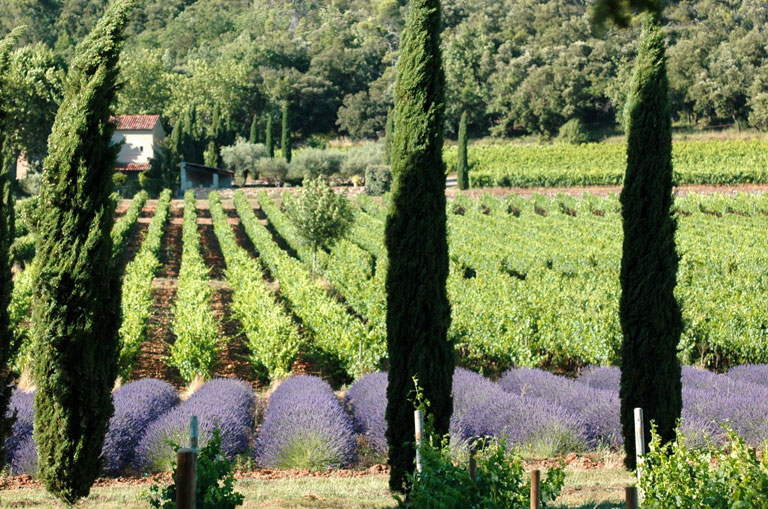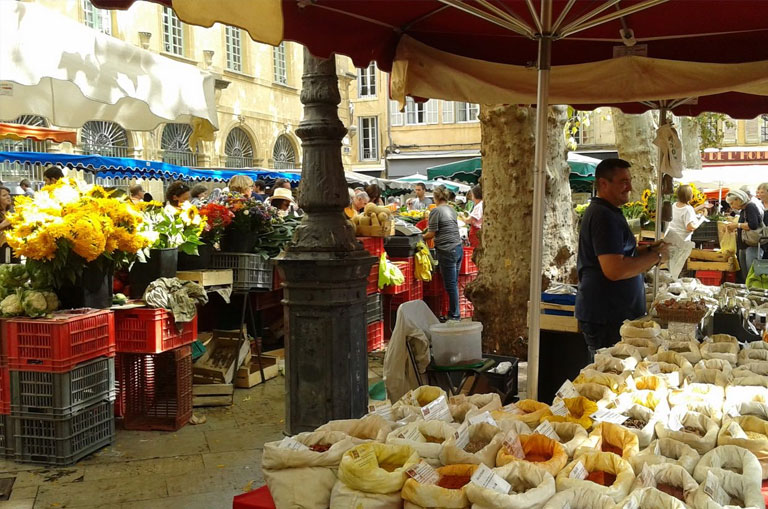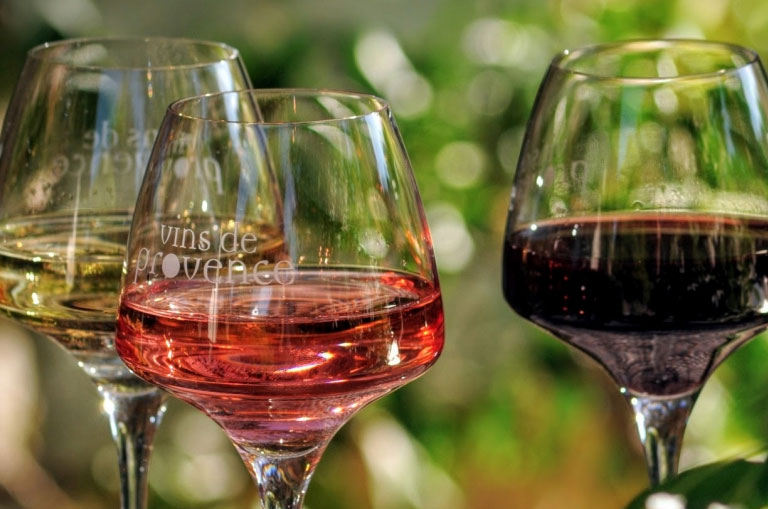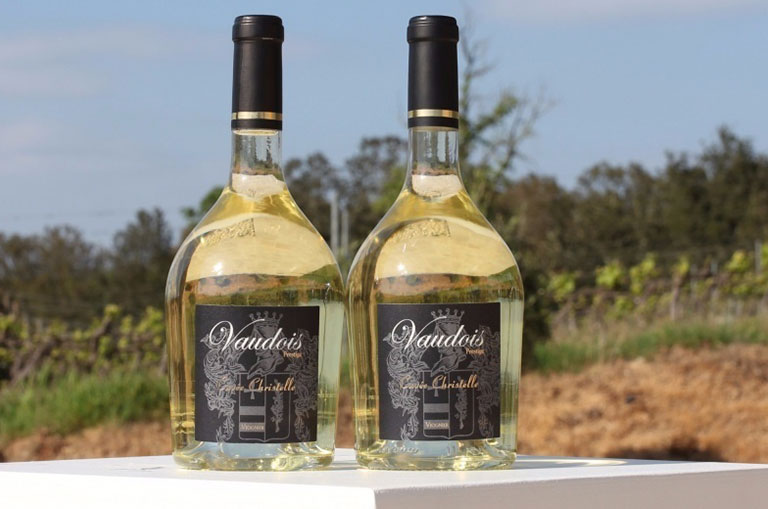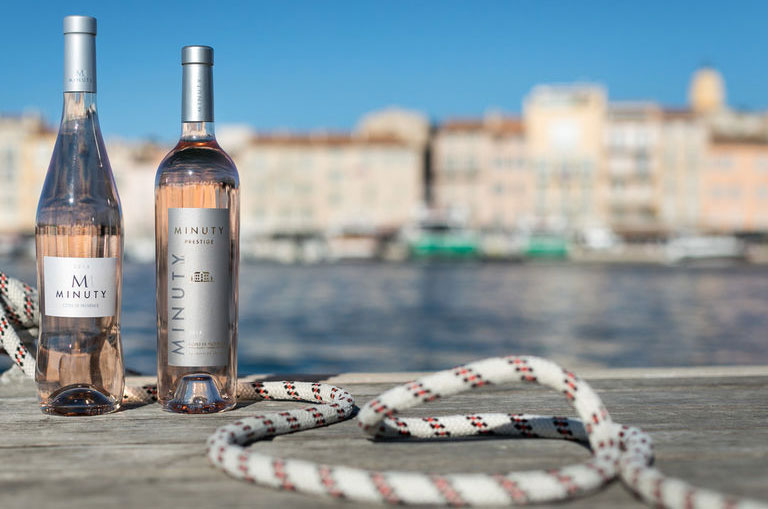
Historically specialising in rosé, Provence has a millennium-old wine-growing history. Its vines stretch out over ever-changing landscapes, around historic cities, on the Mediterranean coast and into the hinterland.
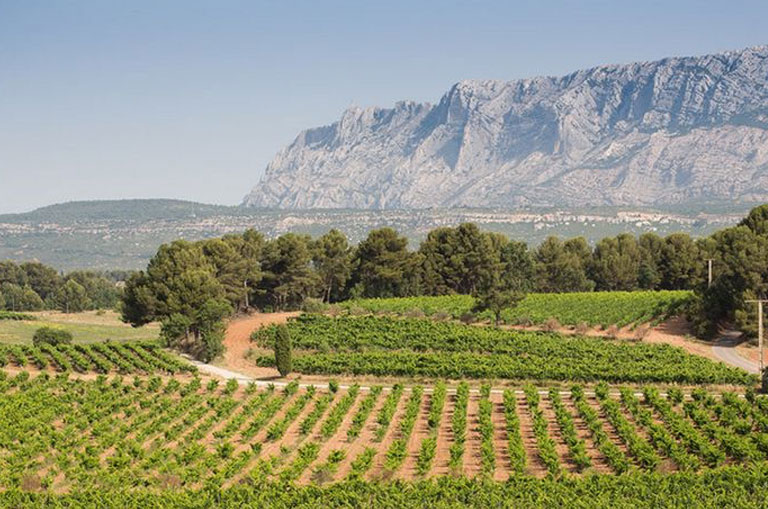
From the gates of Nice to the Camargue region, the Provence wine route takes you from the seaside to mountains and scenic villages perched up high. It combines nine appellations and 430 vineyards, and cooperative wine cellars, all committed to quality. In between your vineyard trips, you will have the opportunity to discover the boutique hotels of Aix-en-Provence, the Sainte-Victoire Mountain (which was painted by the famous French painter, Cézanne), and the Roman amphitheatre of Fréjus. You can also explore the vineyards on foot, by bike or even by boat.
Introduction to the Provence Vineyards
Located in the southeastern region of France, Provence is one of the oldest wine-producing regions in the world. The Mediterranean climate, with its long, sunny summers and mild winters, provides ideal growing conditions for various grape varieties. The region is known for producing some of the world’s best rosé wines and a range of white, red, and sparkling wines.
Provence Traditions
Provence has a rich winemaking tradition that dates back over 2,600 years. The Greeks were the first to plant vineyards in the region, followed by the Romans. Today, many wineries in Provence still use traditional winemaking techniques, such as hand-harvesting and foot-stomping grapes, to produce their wines. The region is also known for its use of organic and biodynamic farming practices, which help preserve the region’s natural beauty.
Exploring the Wine Trails of Provence
The wine trails of Provence offer visitors a chance to explore the beautiful countryside, taste some of the region’s finest wines, and learn about the local winemaking traditions. Some of Provence’s most popular wine trails include the Côtes de Provence Wine Route, the Luberon Wine Trail, and the Bandol Wine Trail.
- Côtes de Provence: The largest AOC and the biggest producer, with about 75% of wine production, of which 89% is Rosé. Many think of “Côtes de Provence” as boring, but actually, it’s the opposite. Just get to know a bit about the various areas and sub-regions, and you’ll appreciate the wide variety of wines and styles that reflect their unique terroirs. There are four geographical “Sub Regions” in the Côtes de Provence, and they’re easy to identify as they are allowed to add their names to the label.
- Coteaux d’Aix en Provence: The famous Mistral winds heavily influence this region. The vineyards here dated back as far as 600 BC and were prized by the Royal Courts of Europe in the 15th century. Today, Rosé is king and is usually a blend of Grenache, Mourvedre, Cinsault, Syrah and Counoise.
- Cassis & Bandol: Along the Mediterranean coast of Provence, just east of Marseille, the steep, white limestone cliffs of the Massif des Calanques meet the sea and this is where you find the very first AOC of Provence Cassis. Cassis is the region of Provence for white wines, which have a wonderful elegance and intense aromas of citrus, peach, honey and dried herbs. If Cassis is all about whites, then its neighbour to the east is the perfect opposite. The hillside vineyards form a natural amphitheatre where the terraces are supported by walls made of river stone called ‘restanques’. Bandol produces amazing whites from Clairette blended with Ugni Blanc or Bourbouenc and structured, flavorful rose but its signature wines are rich, intense red wines made with up to 95% Mourvedre and aged in oak for at least 18 months.
- Coteaux Varois de Provence: This region is located in the middle of Provence and features undulating limestone mountain ranges, so many ‘micro-climates’ exist. Vineyards at these slightly higher altitudes are cooler, so the grapes benefit from longer, slower ripening, giving the finished wines good acidity, complex flavours and structure—Rosés rule, crafted from Cinsault, Mourvedre, Grenache and Syrah with whites dominated by Rolle.
- Les Baux de Provence: Probably the hottest part of Provence; so hot it’s home to the Val d’Enfer. Vineyards lie on the hillsides of the Alpilles mountains, and, although the climate and rugged terrain are inhospitable, it’s perfect for grapes. The region is also perfect for biodynamic and organic viticulture. Les Baux also sets itself apart by producing predominantly red wines, with Grenache, Syrah, Cinsault and Cabernet Sauvignon taking centre stage. Discover the Alpilles, which has inspired so many artists (Cézanne, Daudet, Van Gogh…), its light, and its Provençal landscapes resulting from exceptional natural sites shaped by men over time. They all contribute to its rich and fragile identity.
- Palette & Bellet: Nestled below Coteaux d’Aix-en-Provence and coming in at only 100 acres, Palette is the smallest AOC of Provence. There is mandatory ageing of 18 months in oak, and many find the wines similar to Bandol’s. The vineyards of Bellet, on the other hand, dot the steep hillsides surrounding the city of Nice on the far eastern edge of Provence. This is another area that uses some uncommon grape varietals. The dominant white varietal is Rolle, the only AOC in Provence allowed to use Chardonnay. The Rosé from Bellet has a distinctive aroma of rose petals!
- Pierrevert: Pierrevert is most northerly of the Provence AOCs. It is located in the Alpes de Haute Provence, next to the Luberon. Rosé is a big deal here, made from the same varietals as the reds, but it differs from the other parts of Provence. The area’s rules dictate that a minimum of 50% of the wine must be made in the ‘saignée’ method, the only place this technique is allowed.
Provence Wine Tours and Experiences
There are many ways to experience the wines of Provence, from guided tours of the region’s top wineries to hands-on winemaking classes. Visitors can also attend wine festivals and events throughout the year, such as the Rosé Wine Festival in June or the Harvest Festival in September.
Provence Vineyards and Cellars to Visit
Provence is home to many world-renowned wineries, including Château Miraval, owned by Brad Pitt and Angelina Jolie. Other regional wineries include Château Beaulieu, Château Sainte-Roseline, and Domaine de la Croix. Many wineries offer guided tours and tastings, allowing visitors to sample some of the region’s finest wines.
Pairing Provence Wines with Regional Cuisine
Provence is known for its fresh and flavorful cuisine, which pairs perfectly with the region’s wines. Some popular food and wine pairings in Provence include rosé wine with seafood dishes, red wine with grilled meats, and white wine with salads and vegetable dishes. Local specialties, such as bouillabaisse, ratatouille, and tarte Tropézienne, also pair well with the region’s wines.
Visiting the Provence Wine Region
In conclusion, a visit to Provence offers a unique opportunity to explore the rich winemaking traditions of one of the oldest wine regions in the world. With its beautiful countryside, world-renowned wineries, and delicious cuisine, Provence is a must-visit destination for wine lovers and foodies alike.